Top 3 E-commerce Platforms in Japan: What Global Brands Need to Know
Category
Blog, Global, Japan, Localization
Date
2025-08-07
Author
nudge
Contents
Why Japan’s E-commerce Market Is Unique
Japan is home to one of the most mature and mobile-first e-commerce environments in Asia.
It’s a landscape where trust, loyalty points, mobile UX, and domestic platforms drive consumer behavior — often more than price or global brand recognition.
According to the most recent official data, Japan’s B2C e-commerce market exceeded ¥20 trillion in 2021. That figure reflects steady growth, particularly in physical goods categories like fashion, food, and consumer electronics.
Yet despite the scale, online shopping still accounts for less than 10% of total retail — signaling long-term opportunity for digital-first brands who can localize effectively.
Japan’s e-commerce market exceeded ¥20 trillion in 2021, with steady growth in physical goods and mobile shopping
1. Rakuten Ichiba: Japan’s Loyalty Powerhouse
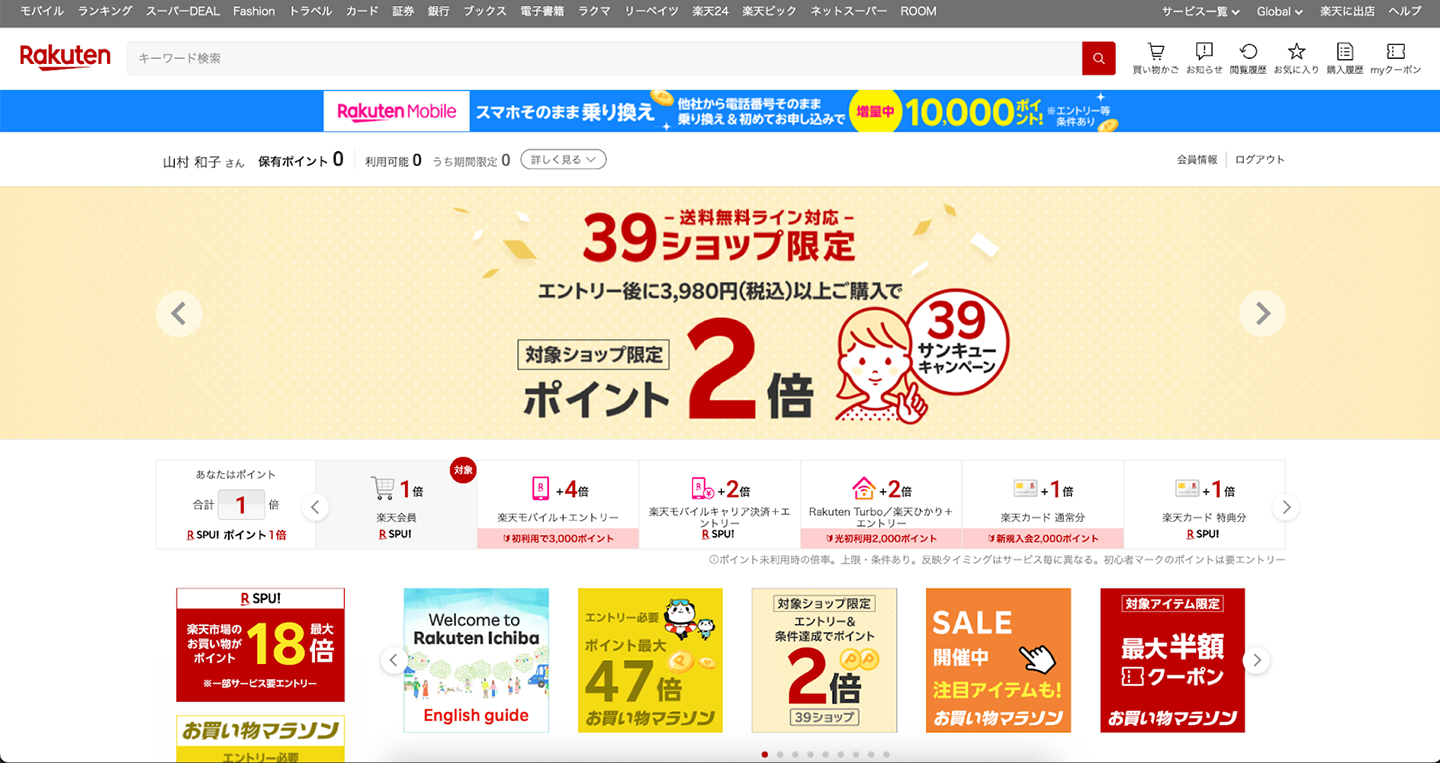
Rakuten Ichiba’s homepage highlights its signature loyalty system, point multipliers, and personalized campaigns — all designed to boost repeat purchases
Rakuten isn’t just a marketplace — it’s a digital ecosystem. Often described as Japan’s version of a virtual shopping mall, Rakuten Ichiba allows each seller to build a branded storefront, manage their own promotions, and engage customers directly.
What sets Rakuten apart is its built-in loyalty engine. The Rakuten Super Points program rewards shoppers with points on every purchase, which can be redeemed across travel, banking, mobile plans, and more — all within Rakuten’s ecosystem. This creates habitual usage and strong repeat behavior, especially among families and value-driven shoppers.
With a deeply local user base and more flexible merchant tools than global platforms, Rakuten is especially powerful for:
Brands that want to control their visual identity and pricing
Businesses looking to build long-term customer relationships
Companies that benefit from loyalty-driven retention
2. Amazon Japan: Efficiency Meets Scale
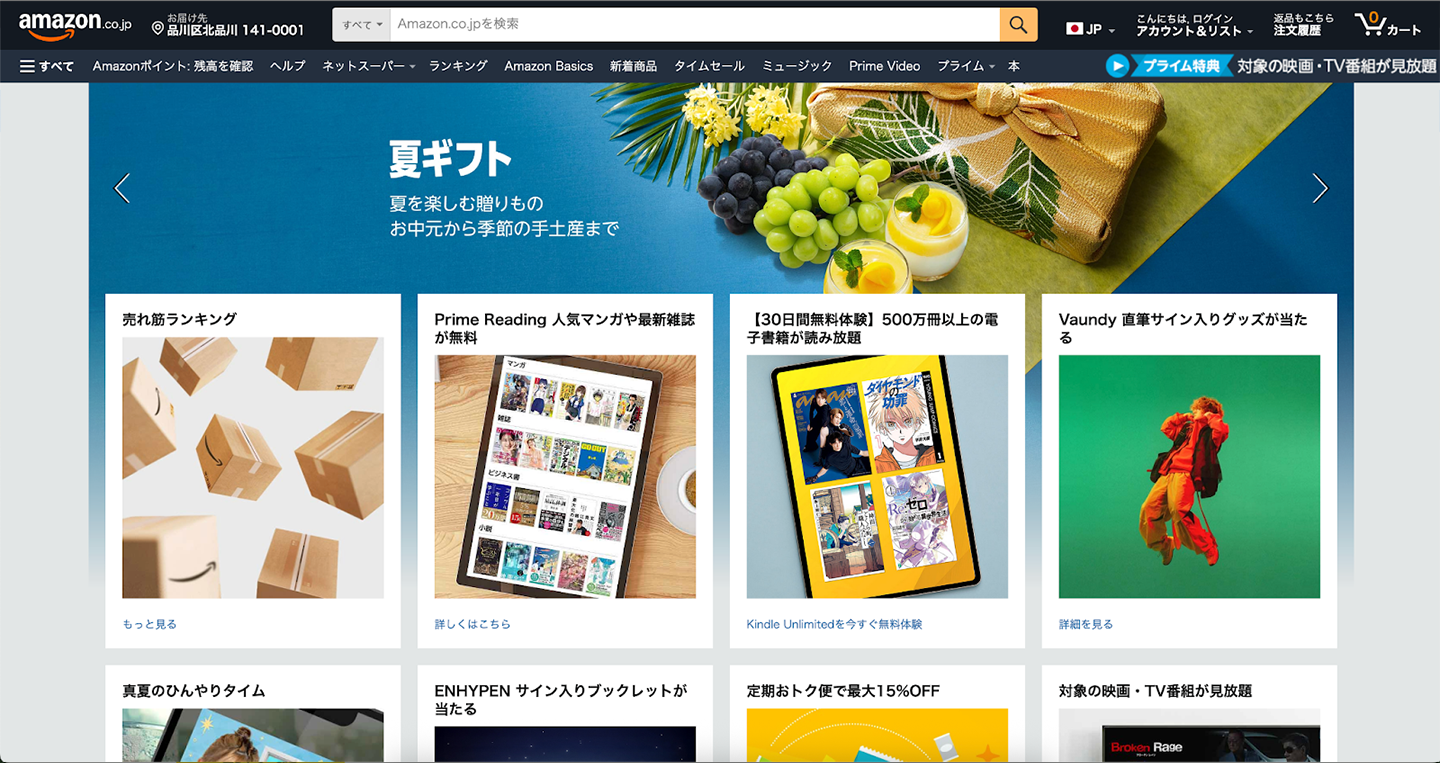
Amazon Japan emphasizes seasonal campaigns, digital services like Kindle Unlimited, and algorithm-driven personalization — all tailored to Japan’s mobile-first shoppers
Amazon Japan offers what many global brands expect: speed, scale, and frictionless logistics. With a user interface familiar to international shoppers and robust Prime membership benefits, Amazon attracts consumers looking for efficiency, convenience, and fast delivery.
Where Amazon shines in Japan is in:
Logistics dominance through its nationwide fulfillment network
Cross-border capabilities for brands outside Japan
Algorithm-based merchandising and dynamic search rankings
For global brands, Amazon Japan is a strong launchpad — especially for categories like consumer electronics, daily necessities, and international bestsellers. But unlike Rakuten, it offers less control over branding and fewer tools for direct loyalty cultivation.
3. Yahoo! Shopping: A Value-Driven Ecosystem
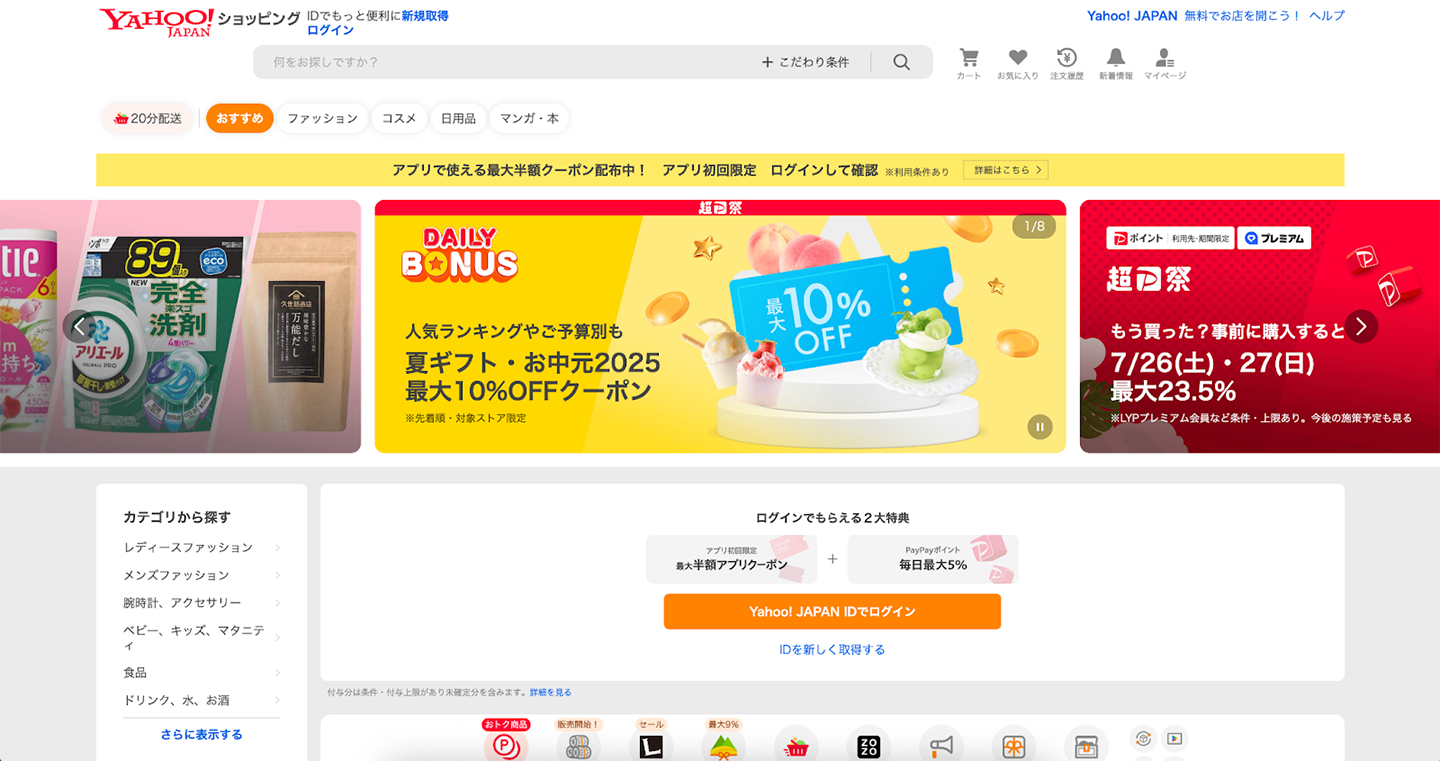
Yahoo! Shopping emphasizes value with limited-time coupons, PayPay point incentives, and seasonal campaigns — all designed to attract deal-seeking mobile users
Yahoo! Shopping thrives by blending search visibility, payment perks, and loyalty incentives — all tightly integrated with PayPay (Japan’s top mobile wallet) and Yahoo! JAPAN accounts. It appeals to price-conscious, deal-savvy users and is often the most flexible option for sellers entering the Japanese market.
Key strengths include:
No base commission fees for merchants, unlike competitors
Incentive stacking with daily coupons, time-limited offers, and PayPay points
A user base that actively compares across Yahoo!, Rakuten, and Amazon
While Yahoo! Shopping doesn’t carry the brand prestige of Rakuten or the fulfillment power of Amazon, it offers high return on spend and strong mobile commerce performance, particularly when paired with smart campaign strategies.
Choosing the Right Platform for Your Brand
Japan’s top e-commerce platforms all offer massive reach — but the ideal starting point depends on your business model, goals, and product category.
Rakuten
Best for
Brands seeking deeper engagement, loyalty, and control over their brand experience
Why
Rakuten is ideal for merchants that want to build a long-term presence and can invest in optimizing store visuals, campaigns, and membership perks.
Amazon Japan
Best for
Brands focused on fast market entry, logistics efficiency, and competitive pricing
Why
Amazon’s Prime ecosystem, fulfillment dominance, and international familiarity make it a strong option for high-turnover consumer goods and global brands.
Yahoo! Shopping
Best for
Value-driven campaigns and mobile-first conversions
Why
With low merchant fees and deep integration with PayPay, Yahoo! Shopping is cost-effective and ideal for brands targeting deal-savvy Japanese consumers.
🚀 Final Takeaway: Japan’s Market Demands a Localized Approach
Entering Japan’s e-commerce ecosystem isn’t just about translating your site — it’s about understanding user behavior, channel dynamics, and platform-specific strategies. Whether you prioritize loyalty, logistics, or reach, a localized platform approach will unlock your competitive edge.
✨ Ready to grow your brand in Japan?
Apply to work with us and see how our team can help you accelerate growth with social media on Rakuten, Amazon Japan, and Yahoo! Shopping — with strategies built for mobile-first Japanese consumers.






![Korean Social Media Strategy: Naver Clip, Instagram, or YouTube? [Ep. 1]](https://nudgecomms2.mycafe24.com/wp-content/uploads/2025/07/blog_thumb_0099.webp)